
Intermodal Freight 101: When Rail + Road Deliver Better Value Than Truck Alone
Introduction: Why Intermodal Freight Is Surging in Popularity
With rising trucking costs, driver shortages, fluctuating fuel prices, and increasing demand for sustainable transportation solutions, many shippers are shifting toward intermodal freight—a strategic mode that blends the efficiency of rail with the flexibility of trucking.
Intermodal shipping isn’t new, but it is experiencing a major resurgence as shippers search for ways to cut costs, increase reliability, and mitigate capacity challenges. When deployed strategically, intermodal can outperform truckload-only options in cost stability, environmental impact, and long-haul efficiency—while still preserving the convenience of over-the-road movement for first and final mile.
At Welcome Logistics, we help shippers determine whether intermodal is the right fit for their freight mix, and how to leverage it for maximum value. Below, we break down exactly how intermodal works, why it’s growing quickly, and when it delivers better value than using trucks alone.
What Is Intermodal Freight? The Basics Explained
Intermodal freight uses multiple modes of transportation—typically truck + rail—to move goods from origin to destination. The key differentiator is that freight remains in the same container throughout the entire journey, eliminating the need for product handling or reloading.
A typical intermodal movement looks like this:
Truck pickup at shipper’s facility
Rail transport for the long-haul portion
Truck delivery to the final consignee
Because containers can be seamlessly transferred between trucks and trains, intermodal offers a smooth, secure, and cost-efficient alternative to full truckload (FTL) shipments—particularly on long-distance lanes.
Why Shippers Are Turning to Intermodal: Key Benefits
Intermodal is gaining momentum for several meaningful reasons. For the right freight profile, it often delivers better value than truckload alone.
1. Significant Cost Savings on Long-Haul Freight
Rail transportation can move large volumes of freight using far less fuel per mile than trucks. This efficiency makes intermodal more cost-effective on longer routes—especially those over 750 miles.
Shippers benefit from:
Lower linehaul rates compared to OTR trucking
Reduced exposure to volatile fuel prices
More predictable long-term pricing agreements
Rail’s cost structure remains steadier over time, giving supply chains more budget stability.
2. Greater Capacity and Reliability During Tight Markets
When the trucking market tightens, capacity can become limited, unpredictable, and expensive. Rail networks offer an alternative with:
Vast nationwide capacity
High service consistency
Freedom from driver shortage impacts
Scheduled, repeatable transit times
Intermodal helps shippers avoid trucking bottlenecks and secure reliable options during peak seasons.
3. A More Sustainable Freight Solution
According to the Association of American Railroads, trains are up to four times more fuel-efficient than trucks, and moving freight by rail can reduce greenhouse gas emissions by as much as 75% per ton-mile.
This makes intermodal ideal for companies seeking to:
Reduce their transportation carbon footprint
Meet ESG commitments
Participate in greener supply chain initiatives
Learn more about rail’s sustainability impact on the AAR website: https://www.aar.org/issue/freight-rail-and-the-environment/
4. Reduced Risk of Damage and Loss
Because freight stays in the same sealed container throughout the journey, there is less:
Handling
Exposure to the elements
Risk of theft
Potential for damage
This makes intermodal a strong option for packaged goods, consumer products, non-perishables, and other freight that does not require high-touch handling.
5. Consistent Transit Times on Predictable Lanes
Rail may not match truckload speeds on shorter distances, but it offers highly consistent, scheduled movement on long-haul lanes.
For freight with predictable timelines, intermodal delivers steady, repeatable transit performance that many shippers prefer over fluctuating OTR conditions.
How Intermodal Freight Works: A Step-by-Step Look
To understand how intermodal delivers such strong value, it helps to look at the process from end to end.
1. First-Mile Drayage (Truck)
A truck picks up the empty or loaded container from the shipper’s facility and transports it to the railroad ramp.
2. Rail Linehaul (Train)
The container is moved via double-stack rail service across long distances—thousands of miles in some cases—with competitive transit times.
3. Last-Mile Drayage (Truck)
Once the container reaches the rail ramp near its destination, a drayage carrier delivers it to the receiver.
Intermodal Advantages by Step
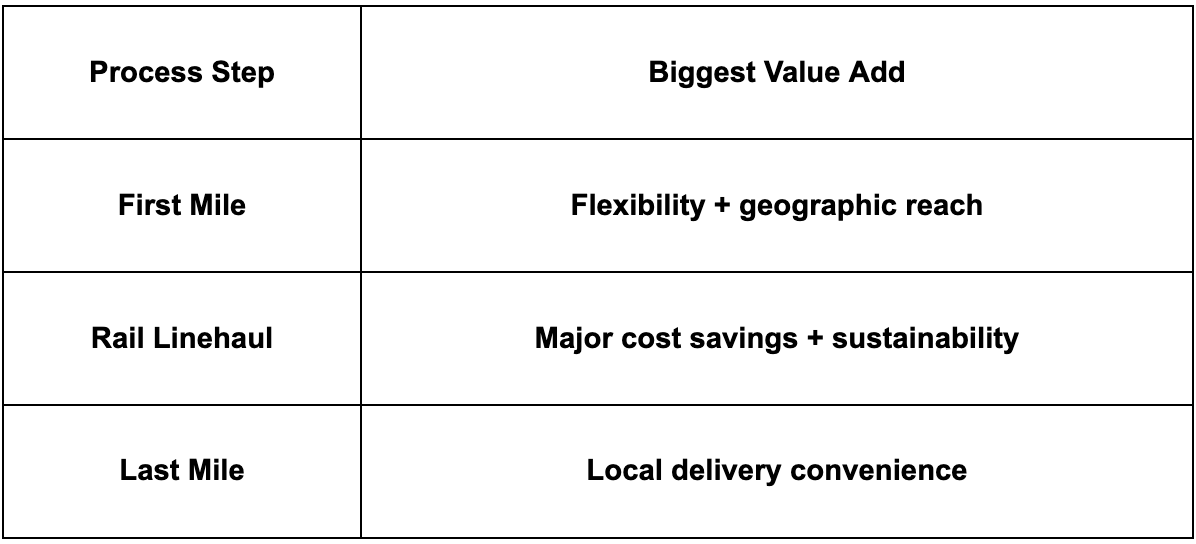
This combination of strengths makes intermodal extremely effective when deployed on lanes where rail is optimized and drayage distances are manageable.
When Intermodal Beats Trucking Alone: Ideal Use Cases
Intermodal is not the right choice for every shipment—but when it fits, it delivers powerful advantages.
Here are the most common scenarios where intermodal outperforms over-the-road trucking:
1. Long-Distance, Predictable Loads
Intermodal is strongest on lanes over:
750 miles (minimum threshold for savings)
1,000–2,500 miles (where rail shines)
Think California → Midwest or Texas → East Coast.
If your freight flows are consistent week to week, intermodal can lock in predictable transit times and long-term savings.
2. Non-Urgent, High-Volume Shipments
If speed is not the top priority, intermodal becomes extremely attractive for:
Consumer packaged goods
Retail inventory replenishment
Appliances & electronics
Building materials
Paper, plastics & packaging
Many Fortune 500 shippers use intermodal as their backbone mode for steady, predictable freight.
3. Cost-Sensitive Freight
If lowering transportation spend is a priority, intermodal often beats trucking by:
10–30% on total transportation cost
Even more on fuel surcharge reductions
This is especially true on high-volume, repetitive lanes.
4. Environmentally Conscious Supply Chains
For companies with sustainability goals, intermodal is one of the fastest ways to meet emissions-reduction targets without sacrificing performance.
5. Freight Leaving Congested Regions
Intermodal helps reduce reliance on high-demand trucking markets—such as Southern California, Chicago, or Atlanta—by shifting the long-haul miles to rail.
Challenges to Consider Before Choosing Intermodal
While intermodal offers tremendous benefits, it’s important to evaluate whether it fits your operational needs.
1. Longer Transit Times vs. Trucking
Intermodal is reliable but usually not as fast as a dedicated truck.
2. Drayage Market Variability
Drayage availability and local congestion can affect pickup and delivery timing.
3. Not Ideal for Time-Critical Freight
Expedited, just-in-time, or perishable freight may require OTR solutions.
4. Weight Restrictions
Intermodal container weight limits may differ slightly from over-the-road allowances.
This is why partnering with an experienced logistics provider is critical—they help match the right freight to the right mode.
How Welcome Logistics Helps You Maximize Intermodal Value
Intermodal works best when supported by strong planning, communication, and carrier coordination. Welcome Logistics provides the operational and strategic support needed to get the most value from your intermodal program.
We assist shippers by:
Identifying lanes with the strongest savings and reliability potential
Evaluating rail ramp access based on your facility locations
Coordinating all drayage and long-haul rail components
Monitoring real-time container movement and rail dwell time
Providing predictive ETAs and proactive exception alerts
Managing appointments and delivery schedules
Whether you’re exploring intermodal for the first time or expanding your network, we help you build a strategy tailored to your freight profile.
Conclusion: Intermodal Is a Smarter, More Sustainable Choice for Today’s Shippers
As supply chains face increasing pressure for cost control, sustainability, and reliability, intermodal freight has become one of the most effective tools for long-haul logistics. When used strategically, it:
Reduces transportation cost
Improves capacity reliability
Lowers emissions
Strengthens long-term supply chain stability
For many businesses, intermodal isn’t just an alternative to trucking—it’s a superior solution that blends efficiency with flexibility.
Welcome Logistics is here to help you determine where intermodal fits, how to integrate it alongside your truckload strategy, and how to measure the impact across your network.
